specialty journal of medical research and health science
Volume 9,
2024,
Issue 1
Investigating Delays in Patient Discharges: Insights from a Tertiary Care Hospital in Riyadh, Saudi Arabia
Asma Al Hamazani* ,
Abdulrahman Al Robayan ,
Abdulrahman Al Khalifah ,
Omar Al Jebreen ,
Nasser Mohammad Aziz Alshahri ,
Asma Abdullah Al Abdulsalam ,
Noorah Alomani ,
Yousef Safar M Al Otaibi ,
Sameah Rasheed Alanazi ,
Rawabi Ibrahim Alguhraydi ,
Abeer Ahmed Alasmari ,
Amal Fahad Alsufaian ,
Wejdan Eid Albogami
-
Consultant Dentist- Prince Sultan Military Medical City, Riyadh, Saudi Arabia.
-
Consultant Gastroenterology, Prince Sultan Military Medical City, Riyadh, Saudi Arabia.
-
Consultant Radiology, Prince Sultan Military Medical City, Riyadh, Saudi Arabia.
-
Consultant Orthopedics, Prince Sultan Military Medical City, Riyadh, Saudi Arabia
-
Senior Radiographer, Prince Sultan Military Medical City, Riyadh, Saudi Arabia
-
Senior Specialist Midwife/ Senior Quality Specialist, Prince Sultan Military Medical City, Riyadh, Saudi Arabia
-
Medical Secretary, Prince Sultan Military Medical City, Riyadh, Saudi Arabia
-
Assistant specialist health administration, Prince Sultan Military Medical City, Riyadh, Saudi Arabia
-
Case Management Manager, Prince Sultan Military Medical City, Riyadh, Saudi Arabia.
Pages: 1-14
Abstract
Delayed hospital discharges pose a significant challenge, impacting both patient care and the efficiency of healthcare services. An “inpatient” is someone admitted to the hospital to receive treatment and take advantage of a variety of hospital services. The admission process encompasses observation, diagnosis, and treatment, while discharge occurs when a patient leaves the hospital after completing their treatment. Delays in this discharge process can result in unnecessarily prolonged hospital stays, which diminish the quality of care patients receive and substantially drive up healthcare costs. Extended hospitalizations also isolate patients from their families and communities, while exposing them to preventable risks, such as hospital-acquired infections, depression, and physical decline. The primary objective of this study is to explore the discharge process, pinpoint the factors causing delays, and propose strategies to reduce discharge times. Discharge delays typically happen when patients are medically cleared but remain in the hospital for non-medical reasons. This not only creates backlogs in emergency services but also increases healthcare costs, affecting the overall efficiency of the healthcare system. Various factors contribute to these delays, including clinical care challenges, patient preferences, hospital infrastructure limitations, and external influences like insurance policies. Understanding the root causes of delayed discharges is crucial for healthcare providers aiming to develop effective solutions. By identifying specific factors responsible for delays, hospitals can implement targeted interventions to enhance discharge efficiency, improve patient outcomes, and optimize overall hospital performance. This holistic approach requires coordinated teamwork within hospitals and collaboration between healthcare and social services to effectively address this systemic issue.
Keywords:
Saudi Arabia, Patient discharges, Hospital, Riyadh, Delays
How to cite:
Vancouver
Al Hamazani A, Al Robayan A, Al Khalifah A, Al Jebreen O, Alshahri NMA, Al Abdulsalam AA, et al. Investigating Delays in Patient Discharges: Insights from a Tertiary Care Hospital in Riyadh, Saudi Arabia. SPEC. J. MED. RES. HEALTH SCI.. 2024;9(1):1-14.
https://doi.org/10.51847/ptgKzoxPTP
APA
Al Hamazani, A., Al Robayan, A., Al Khalifah, A., Al Jebreen, O., Alshahri, N. M. A., Al Abdulsalam, A. A., Alomani, N., Al Otaibi, Y. S. M., Alanazi, S. R., Alguhraydi, R. I., et al. (2024). Investigating Delays in Patient Discharges: Insights from a Tertiary Care Hospital in Riyadh, Saudi Arabia.
specialty journal of medical research and health science, 9(1), 1-14.
https://doi.org/10.51847/ptgKzoxPTP
References
- Åhlin P, Almström P, Wänström C. When patients get stuck: A systematic literature review on throughput barriers in hospital-wide patient processes. Health Policy. 2022;126(2):87-98.
- Aphasia Pathway. Discharge planning. Available from: http://www.aphasiapathway.com.au/?name=Discharge-planning. Accessed 27 Aug 2022.
- Auerbach C, Mason SE, Heft Laporte H. Evidence that supports the value of social work in hospitals. Soc Work Health Care. 2007;44(4):17-32.
- Berg JE, Restan A. Duration of bed occupancy as calculated at a randomly chosen day in an acute care ward. Ann Gen Psychiatry. 2005;4(1):1-6.
- Carroll A, Dowling M. Discharge planning: Communication, education and patient participation. Br J Nurs. 2007;16(14):882-6.
- Costa AP, Poss JW, Peirce T, Hirdes JP. Acute care inpatients with long-term delayed-discharge: Evidence from a Canadian health region. BMC Health Serv Res. 2012;12:172. doi:10.1186/1472-6963-12-172
- Department of Health. Ready to go? Available from: https://www.sheffieldmca.org.uk/UserFiles/File/Ward_Collab/Ward_Principles/Ready_to_Go_Hospital_Discharge_Planning.pdf. Accessed 29 Aug 2022.
- Donald W. Reynolds. Interdisciplinary Team Care: Case 1. Available from: https://m.youtube.com/watch?v=bYDuzL5zUL0&feature=emb_logo.
- East London Health & Care Partnership. Roles and responsibilities in discharge planning. Available from: https://www.eastlondonhcp.nhs.uk/downloads/ourplans/Children/Professionals/Discharge%20roles%20and%20responsibilities.pdf. Accessed 28 Aug 2022.
- Enhance OT. Discharge planning OT services. Available from: https://enhanceot.com.au/discharge-planning-ot-services. Accessed 27 Aug 2022.
- Goldman J, MacMillan K, Kitto S, Wu R, Silver I, Reeves S. Bedside nurses' roles in discharge collaboration in general internal medicine: Disconnected, disempowered and devalued? Nurs Inq. 2018;25(3)
- Gonçalves-Bradley DC, Lannin NA, Clemson L, Cameron ID, Shepperd S. Discharge planning from hospital. Cochrane Database Syst Rev. 2022;2022(2):1-116. doi:10.1002/14651858.CD000313.pub6
- Gonçalves-Bradley DC, Lannin NA, Clemson LM, Cameron ID, Shepperd S. Discharge planning from hospital. Cochrane Database Syst Rev. 2016;2016(1).
- Gonçalves-Bradley DC, Lannin NA, Clemson LM, Cameron ID, Shepperd S. Discharge planning from hospital. Cochrane Database Syst Rev. 2016;2016(1):1-89. doi:10.1002/14651858.CD000313.pub5
- Gordons Food Service. Nutrition's Vital Role in Discharge Planning. Available from: https://www.gfs.com/en-us/ideas/nutrition%E2%80%99s-vital-role-in-discharge-planning. Accessed 29 Aug 2022.
- Gowda M, Gajera G, Srinivasa P, Ameen S. Discharge planning and mental healthcare act 2017. Indian J Psychiatry. 2019;61(Suppl 4).
- Haw C, Otuwehinmi O, Kotterbova E. Out of area admissions to two independent sector PICUs: patient characteristics, length of stay and delayed discharges. J Psychiatric Intensive Care. 2017;13(1):27-36.
- Hegarty C, Buckley C, Forrest R, Marshall B. Discharge planning: Screening older patients for multidisciplinary team referral. Int J Integr Care. 2016;16(4):1.
- Henke RM, Karaca Z, Jackson P, Marder WD, Wong HS. Discharge planning and hospital readmissions. Med Care Res Rev. 2017;74(3):345-68.
- Holliman D, Dziegielewski SF, Teare R. Differences and similarities between social work and nurse discharge planners. Health Soc Work. 2003;28(3):224-31.
- Hsiung DY, Lin EC, Lin KP, Lee MC. Discharge planning: practical implementation in psychiatric care. Hu Li Za Zhi. 2010;57(2 Suppl).
- Ibrahim H, Harhara T, Athar S, Nair SC, Kamour AM. Multi-disciplinary discharge coordination team to overcome discharge barriers and address the risk of delayed discharges. Risk Manag Healthc Policy. 2022;15:141-9.
- Jette DU, Grover L, Keck CP. A qualitative study of clinical decision making in recommending discharge placement from the acute care setting. Phys Ther. 2003;83(3):224-36.
- Landeiro F, Leal J, Gray AM. The impact of social isolation on delayed hospital discharges of older hip fracture patients and associated costs. Osteoporos Int. 2016;27(2):737-45. doi:10.1007/s00198-015-3293-9
- Laur C, Curtis L, Dubin J, McNicholl T, Valaitis R, Douglas P, et al. Nutrition care after discharge from hospital: An exploratory analysis from the more-2-eat study. Healthcare (Basel). 2018;6(1):9.
- Li H, Guffey W, Honeycutt L, Pasquale T, Rozario NL, Veverka A. Incorporating a pharmacist into the discharge process: A unit-based transitions of care pilot. Hosp Pharm. 2016;51(9):744-51.
- Little J, Hirdes JP, Daniel I, editors. ALC status in in-patient mental health settings: Evidence based on the Ontario Mental Health Reporting System. Healthcare Management Forum. Los Angeles, CA: SAGE Publications Sage CA; 2015.
- Micallef A, Buttigieg SC, Tomaselli G, Garg L. Defining delayed discharges of inpatients and their impact in acute hospital care: A scoping review. Int J Health Policy Manag. 2022;11(2):103-11. doi:10.34172/ijhpm.2020.94
- New PW, McDougall KE, Scroggie CP. Improving discharge planning communication between hospitals and patients. Intern Med J. 2016;46(1):57-62.
- NHS England. Adoption of a new pandemic Multi-Disciplinary team (MDT) approach to discharge planning. Available from: https://www.england.nhs.uk/nursingmidwifery/shared-governance-and-collective-leadership/nursing-covid-19-catalogue-of-change/adoption-of-a-new-pandemic-multi-disciplinary-team-mdt-approach-to-discharge-planning/. Accessed 29 Aug 2022.
- Nunes HJ, Queirós PJ. Patient with stroke: Hospital discharge planning, functionality and quality of life. Rev Bras Enferm. 2017;70(2):415-23.
- Nursing Times. The key principles of effective discharge planning. 2013;109(3).
- Patel H, Yirdaw E, Yu A, Slater L, Perica K, Pierce RG, et al. Improving early discharge using a team-based structure for discharge multidisciplinary rounds. Prof Case Manag. 2019;24(2):83-9.
- Patel PR, Bechmann S. Discharge planning. 2022 Apr 5. In: StatPearls [Internet]. Treasure Island (FL): StatPearls Publishing; 2022.
- Ragavan MV, Svec D, Shieh L. Barriers to timely discharge from the general medicine service at an academic teaching hospital. Postgrad Med J. 2017;93(1103):528-33.
- Tipton K, Leas BF, Mull NK, Siddique SM, Greysen SR, Lane-Fall MB, et al. Interventions to decrease hospital length of stay. 2021. doi:10.23970/AHRQEPCTB40
- Tucker S, Hargreaves C, Wilberforce M, Brand C, Challis D. What becomes of people admitted to acute old age psychiatry wards? An exploration of factors affecting length of stay, delayed discharge and discharge destination. Int J Geriatr Psychiatry. 2017;32(9):1027-36.
- Walker PC, Bernstein SJ, Jones JN, Piersma J, Kim HW, Regal RE, et al. Impact of a pharmacist-facilitated hospital discharge program: A quasi-experimental study. Arch Intern Med. 2009;169(21):2003-10.
- Waring J, Marshall F, Bishop S, Sahota O, Walker M, Currie G, et al. An ethnographic study of knowledge sharing across the boundaries between care processes, services and organisations: The contributions to ‘safe’ hospital discharge. Southampton (UK): NIHR Journals Library; 2014 Sep. (Health Services and Delivery Research, No. 2.29.) Chapter 4, Discharge planning and care transition. Available from: https://www.ncbi.nlm.nih.gov/books/NBK259993/.
- WellChild. Appendix B1: Discharge Checklist: child/young person with complex needs/NIV. Available from: https://www.wellchild.org.uk/wp-content/uploads/2021/07/Appendix-B1-Discharge-Checklist-CYP-with-complex-needs-NIV.pdf. Accessed 28 Aug 2022.
- Worthington AD, Oldham JB. Delayed discharge from rehabilitation after brain injury. Clin Rehabil. 2006;20(1):79-82. doi:10.1191/0269215506cr881oa
- Wright JR, Koch-Hanes T, Cortney C, Lutjens K, Raines K, Shan G, et al. Planning for safe hospital discharge by identifying patients likely to fall after discharge. Phys Ther. 2022;102(2).
- Xiao S, Tourangeau A, Widger K, Berta W. Discharge planning in mental healthcare settings: A review and concept analysis. Int J Ment Health Nurs. 2019;28(4):816-32.
Keywords:
Saudi Arabia, Patient discharges, Hospital, Riyadh, Delays
INTRODUCTION
An “inpatient” refers to an individual who is admitted to a hospital to receive treatment and benefit from the full spectrum of services available. Hospital admission involves keeping a patient for observation, diagnostics, and treatment for their medical condition. Discharge, on the other hand, marks the process of releasing a patient from the hospital once treatment concludes. This process starts when a treating consultant approves the discharge and ends when the patient physically departs from the facility (Gonçalves-Bradley et al., 2016; Henke et al., 2017; Ibrahim et al., 2022).
The admission and discharge processes are critical touchpoints in a patient’s hospital experience and are often sources of delays, negatively impacting hospital efficiency. Ideally, for planned admissions, the discharge process should be considered right from admission, especially when no complications are expected (Jette et al., 2003; Carroll & Dowling, 2007; Patel et al., 2019).
Prolonged hospital stays have long been a concern, as they can compromise care quality and significantly inflate healthcare costs. Long hospitalizations not only isolate patients from their families and communities but also expose them to avoidable risks, including hospital-acquired infections, depression, physical decline, deep vein thrombosis, and falls (Wright et al., 2022; WellChild, 2022).
Hospital discharge (HD) delays contribute to inefficient use of acute care beds, compounding the challenges facing healthcare systems. With an increasing number of chronic patients dependent on non-hospital care, acute care beds are often occupied by patients who no longer need intensive treatment. Therefore, it is essential to identify the reasons behind each delayed discharge (Waring et al., 2014; East London Health & Care Partnership, 2022).
Delayed discharge occurs when a patient is medically ready to leave the hospital but remains due to non-medical factors. Such delays can result in a decline in the patient’s level of care and engagement while they await their next destination. Additionally, delayed discharges can cause a cascade of issues, including emergency service backlogs, surgery cancellations, and delays in medically necessary treatments (Enhance, 2022). They also increase healthcare costs (Nunes & Queirós, 2017), risk of functional decline (Hegarty et al., 2016; Aphasia Pathway, 2022), falls (Ragavan et al., 2017), hospital-related adverse events (e.g., medication errors, infection exposure) (New et al., 2016; Patel & Bechmann, 2022), and even mortality rates (Nursing Times, 2013). These delays ultimately detract from the overall experience for both patients and their families (Department of Health, 2022).
Literature review
Remaining hospitalized beyond the necessary time has long been a concern, as it reduces care quality and increases costs (Goldman et al., 2018). Additionally, extended hospital stays prevent patients from reuniting with their families and communities and expose them to risks, such as hospital-acquired infections, depression, loss of physical conditioning, deep vein thrombosis, and falls. Hospital discharge (HD) delays are common in most hospitals, with reported rates varying from 13.5% to 62.0% (NHS England, 2022).
Concerns about the costs related to the inappropriate use of acute care beds arose in the late 20th century (Holliman et al., 2003). A study from 1991 (Auerbach et al., 2007) showed a rise in hospital stays in Canada and the United States, linked to an increasing number of chronic patients who rely on non-hospital care but occupy beds meant for acute care. Recognizing the reasons behind delayed HD in every hospitalization is essential since identifying the problem is the first step toward finding solutions. Adjusting work processes could reduce HD delays without necessitating financial investments in infrastructure (Li et al., 2016).
Research has explored various causes and measured the duration of HD delays (Walker et al., 2009) while suggesting methods to quantify unnecessary days of hospitalization. The Appropriateness Evaluation Protocol (AEP) is the most widely validated tool for assessing the appropriateness of hospitalizations and length of stay across different countries (Xiao et al., 2019). This tool is reliable, with strong inter- and intra-observer agreement (Gowda et al., 2019). However, despite the importance of identifying and minimizing factors that prolong hospital stays unnecessarily, few studies classify the reasons that prevent the discharge of patients whose conditions are stable (Hsiung et al., 2010). This study’s goal was to examine the causes of delays in hospital discharge for patients in internal medicine wards.
A delayed discharge, known as alternate level of care (ALC) in Canada and delayed transfer of care in the UK, occurs when a patient is medically fit for discharge but remains in the hospital for non-medical reasons, such as waiting for a long-term care bed or home care services (Gordons Food Service, 2022). During this wait, patients often experience a decline in their level of care and activity. Delayed discharge can lead to patient flow issues within hospitals, such as emergency service backlogs, surgery cancellations, and delays in medically essential care (Laur et al., 2018). These delays also drive up healthcare costs (Ibrahim et al., 2022) and increase risks, including functional decline (Carroll A, Dowling, 2007; Patel et al., 2019), falls (Jette et al., 2003), and hospital-related adverse events, such as medication errors and infectious disease exposure (Jette et al., 2003; Wright et al., 2022). Additionally, delays are associated with higher mortality rates (WellChild, 2022) and negatively affect patient and family experiences (Donald W. Reynolds. Interdisciplinary Team Care: Case 1).
Study objectives
The primary objectives of this study are to:
- Analyze the discharge process for patients.
- Identify the factors contributing to delays in the discharge process.
- Recommend effective measures and policies to reduce patient discharge times.
Materials and Methods
Data were collected by the nurse in charge of each ward, who filled out a collection sheet documenting the following information:
- Patient’s name and Medical Record Number (MRN)
- Patient’s gender
- The patient’s age is categorized as follows:
- Pediatric (0-14 years)
- Adult (15-65 years)
- Geriatric (above 65 years)
- Time of discharge request
- Time of actual discharge
- Reason for delay, if applicable
The gathered data was analyzed to identify patterns and trends, with recommendations provided based on the analysis results.
Strategies to minimize delayed discharges
- Enhance discharge planning: Begin discharge planning as soon as a patient is admitted to streamline the process and establish clear expectations for both patients and families.
- Implement multidisciplinary teams: Engage a multidisciplinary team, including nurses, doctors, social workers, and discharge coordinators, to comprehensively address patient needs.
- Use standardized protocols: Develop and implement standardized discharge protocols to ensure consistency and efficiency in the discharge process.
- Improve communication: Strengthen communication among healthcare providers, patients, and families to keep everyone informed about discharge procedures and requirements.
- Educate patients and families: Offer education and resources to patients and their families about the discharge process, including care instructions and follow-up appointments.
- Identify and address barriers: Regularly identify and assess barriers to timely discharge, such as waiting for transportation or home care services, and develop strategies to overcome these obstacles.
- Monitor bed availability: Keep track of bed availability to enable timely transfers and discharges, particularly for patients awaiting long-term care placements.
- Utilize technology: Use electronic health records (EHR) and discharge planning software to monitor discharge requests, track progress, and enhance communication.
- Regularly review delayed discharges: Conduct regular reviews of delayed discharges to detect patterns, understand causes, and identify areas for improvement.
- Foster a culture of accountability: Promote a culture where staff members feel responsible for ensuring timely discharges and are empowered to address delays.
- Involve social services early: Engage social workers early in the hospitalization process to assist with discharge planning and address any social issues related to discharge.
- Post-discharge follow-up: Implement follow-up calls or visits to assess patient needs and address any post-discharge issues, ensuring a smooth transition to home or another care facility.
Results and Discussion
Table 1. Patient Discharge Cases and Reasons for Delay in a Tertiary Care Hospital in Riyadh
| |
Cases
|
|
Discharged Against Medical Advice
|
2
|
|
Conditional Discharge after Medical Procedure or Observation or Paper Work
|
82
|
|
Patient or His/Her Family Refuse to Discharge
|
38
|
|
Patient Still Waiting for Medical Services Result
|
67
|
|
Patient Waiting for Family or Relative for Transportation
|
739
|
|
Patient Waiting for the Doctor to Modify Ttos
|
42
|
|
Patient Waiting Her Baby
|
4
|
|
Patients Leave on Time
|
80
|
|
Reason Not Mentioned
|
32
|
|
Waiting for Ambulance Transportation
|
28
|
|
Waiting for Doctor or For Re- Assess
|
16
|
|
Total (SAMPLE SIZE)
|
1130
|
In Table 1 examining the delays in patient discharges at a tertiary care hospital in Riyadh, Saudi Arabia, several key factors emerged, each contributing uniquely to the overall timeline of patient discharges. One of the most notable insights was that transportation issues represented the largest source of delay. Specifically, 739 cases involved patients waiting for family members or relatives to assist with transportation, suggesting a considerable dependency on family support systems for post-discharge logistics. Additionally, ambulance availability was another transportation-related factor, with 28 cases delayed due to patients awaiting ambulance services for transfer.
Administrative and procedural factors also significantly impacted discharge timelines. A total of 82 cases involved conditional discharges, where patients faced delays due to ongoing medical procedures, observation requirements, or incomplete paperwork. Moreover, 42 cases were delayed while patients waited for doctors to modify their TTOs (Take orders), which could involve changes in prescriptions or treatment instructions. Similarly, 67 patients experienced discharge delays while awaiting results from medical services, such as diagnostic tests or consultations, indicating that bottlenecks in obtaining timely medical results are another area impacting discharge efficiency.
Patient and family preferences influenced discharge timing as well, with 38 cases in which patients or their families refused discharge, opting to extend their stay. Additionally, four patients delayed discharge while awaiting the birth of their babies, showing how personal circumstances can impact hospital discharge timelines. Interestingly, 32 cases were categorized with no specific reason mentioned, suggesting that certain delays may lack formal documentation or were the result of unclassified issues.
Despite these delays, it is noteworthy that 80 cases experienced timely discharges, reflecting that, for a segment of the population, the discharge process was efficiently managed. These findings underscore the complex interplay of medical, logistical, and personal factors that contribute to discharge delays, with transportation dependency on family support being the most significant barrier, followed by administrative and procedural challenges. Addressing these areas could lead to more efficient discharge processes, ultimately enhancing patient flow and hospital resource management.
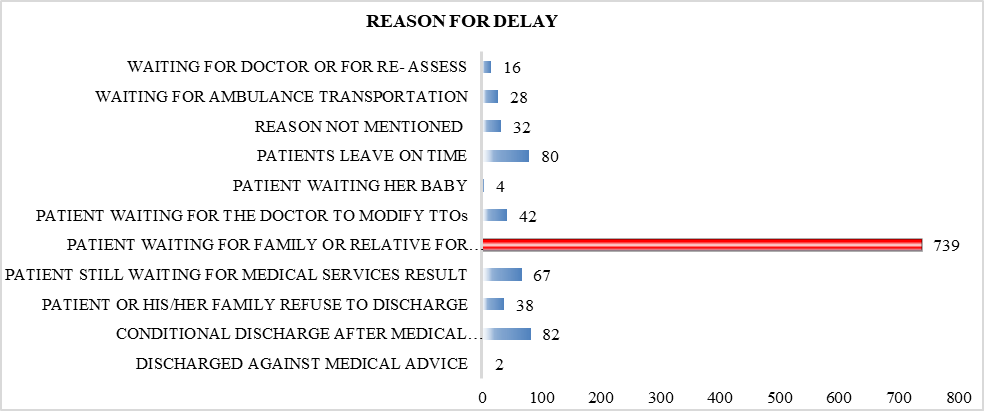
This chart visualizes the reasons for delays in patient discharges in a tertiary care hospital in Riyadh, Saudi Arabia. Each category reflects a specific cause of delay, and the length of each bar represents the number of cases affected.
The most significant cause of delay is waiting for family or relatives for transportation, affecting 739 cases, far outpacing any other category. This suggests a strong reliance on family support for discharge logistics, which can impact hospital efficiency and bed availability.
The second major reason, with 82 cases, is conditional discharge after medical procedures, observation, or paperwork. Patients in this category had delays due to additional medical requirements or administrative tasks that had to be completed before discharge.
Other notable delays include waiting for medical service results, with 67 cases, where patients experienced delays while awaiting diagnostic or service outcomes, and waiting for the doctor to modify TTOs (To Take Out orders), with 42 cases, indicating that prescription adjustments or other medical orders contributed to discharge timing.
A smaller but notable number of cases involve patient or family refusal to discharge (38 cases), waiting for ambulance transportation (28 cases), and waiting for reassessment by a doctor (16 cases). Additionally, there were 32 cases where the reason for delay was not documented.
It’s also worth noting that 80 patients were discharged on time, indicating that in some cases, the hospital’s discharge process was efficiently managed. A minimal number of cases involved patients waiting for their baby (4 cases) and discharges against medical advice (2 cases).
Overall, the data highlights the significant impact of logistical factors, particularly transportation, on discharge timelines, followed by medical and administrative procedures. Addressing these issues could enhance discharge efficiency and improve patient flow within the hospital.
|
|
|
Figure 1. Reasons for Patient Discharge Delays in a Tertiary Care Hospital in Riyadh
|
Table 2. Age Distribution of Patients Experiencing Discharge Delays in a Tertiary Care Hospital in Riyadh
|
Patients Age
|
Count
|
|
Adult (14-65)
|
971
|
|
Geriatric ( more than 65)
|
128
|
|
Pediatric (0-14)
|
31
|
|
Grand Total
|
1130
|
|
|
|
Figure 2. Age Distribution of Patients Experiencing Discharge Delays in a Tertiary Care Hospital in Riyadh
|
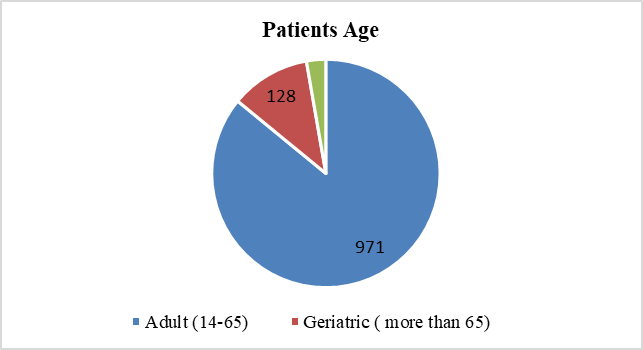
The age distribution of patients involved in the study on discharge delays at a tertiary care hospital in Riyadh, Saudi Arabia, provides insights into the demographics affected by these delays. The largest proportion of patients experiencing discharge delays falls within the adult age group (14-65 years), comprising 971 cases. This suggests that the majority of discharge delays impact adults, which may reflect the hospital’s general patient demographics or the healthcare needs of the community served. Adults might face various logistical, medical, and administrative challenges during the discharge process, contributing to the observed delays.
The geriatric group (more than 65 years old), with 128 patients, represents the second-largest category in this distribution. Elderly patients often require additional support services and may have complex medical needs, which can complicate discharge procedures. Factors such as chronic health conditions, the need for specialized post-discharge care, or the availability of transportation and family assistance may contribute to the extended discharge times in this group. Addressing these specific needs could improve discharge efficiency for elderly patients, who are more vulnerable to complications from prolonged hospital stays.
Pediatric patients (0-14 years) make up the smallest group in this study, with only a minimal number of cases. This lower representation might indicate fewer pediatric cases overall at the hospital or fewer delays experienced by younger patients. Pediatric patients may follow different healthcare processes or protocols, potentially reducing their discharge times compared to adults and the elderly. This observation suggests that the hospital’s discharge processes are more streamlined for pediatric cases, or that the volume of pediatric patients is relatively low.
Overall, the data highlight that adults and geriatric patients are the primary groups facing discharge delays. These findings suggest a need for targeted strategies to enhance discharge efficiency for adults and elderly patients, possibly through additional support services, streamlined administrative procedures, or improved post-discharge planning. By focusing on the unique needs of these age groups, the hospital could reduce delays and improve the overall discharge process.
Table 3. Gender Distribution of Patients Experiencing Discharge Delays in a Tertiary Care Hospital in Riyadh
|
Gender
|
Count
|
|
Female
|
800
|
|
Male
|
330
|
|
Grand Total
|
1130
|
|
|
|
Figure 2. Gender Distribution of Patients Experiencing Discharge Delays in a Tertiary Care Hospital in Riyadh
|
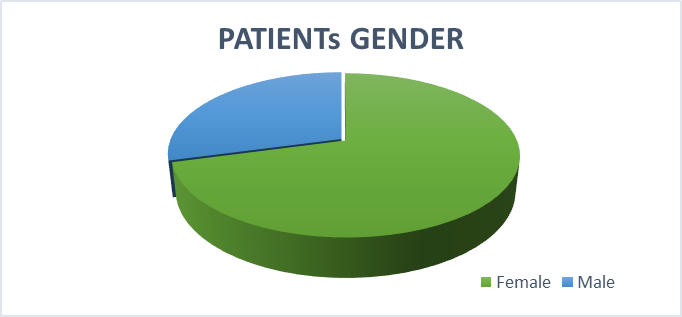
This pie chart illustrates the gender distribution of patients involved in the study on discharge delays at a tertiary care hospital in Riyadh, Saudi Arabia. The two segments represent male and female patients, with females occupying the larger portion of the chart, shown in green, while the smaller segment represents male patients, shown in blue.
The predominance of female patients suggests that a higher proportion of women experienced delays in the discharge process within the sample studied. This could be due to several factors, such as the specific healthcare needs of female patients or higher admission rates among women for certain treatments or procedures at this hospital. Additionally, cultural or logistical factors may play a role in prolonging discharge times for female patients, such as waiting for family support for transportation or assistance.
On the other hand, the smaller representation of male patients in this chart indicates fewer men were involved in delayed discharge cases compared to women. This difference might point to varying hospital utilization patterns between genders or possibly differing discharge processes based on the types of treatments commonly required by each gender.
Overall, the chart highlights a gender disparity in discharge delays, with female patients being more significantly affected. This insight may prompt the hospital to examine and address any gender-specific barriers in the discharge process, aiming to streamline and equalize discharge efficiency across genders.
Table 4. Discharge Timeliness, Length of Stay, and Patient Distribution by Hospital Building in a Tertiary Care Hospital in Riyadh
|
% Of Patients Leave On Time
|
7.07%
|
|
% Of Patients Delay On Discharge
|
71.59%
|
|
DELAY LESS THAN 100min.
|
8.50%
|
|
DELAY MORE THAN 100min.
|
89.65%
|
|
Average Of Length Of Stay (Los)
|
15.06 Days
|
|
Sample Per Hospital Building
|
Count
|
|
BLD.10
|
13
|
|
BLD.2
|
16
|
|
BLD.4
|
510
|
|
BLD.5
|
443
|
|
BLD.8
|
69
|
|
BLD.9
|
79
|
|
Total
|
1130
|
|
|
|
Figure 4. Discharge Timeliness, Length of Stay, and Patient Distribution by Hospital Building in a Tertiary Care Hospital in Riyadh
|
The table provides an overview of discharge timings, delay durations, average length of stay (LOS), and patient distribution across different buildings within a tertiary care hospital in Riyadh, Saudi Arabia. This data reveals significant insights into the hospital’s discharge efficiency and highlights areas for improvement. Notably, only 7.07% of patients were discharged on time, indicating that timely discharges are relatively rare. This suggests potential inefficiencies or barriers within the discharge process that may need to be addressed to improve patient flow and reduce overcrowding.
A substantial 71.59% of patients experienced delays in discharge, emphasizing that a large portion of patients face extended wait times before leaving the hospital. This high percentage of delayed discharges points to a systemic issue that could be influenced by various factors, including administrative procedures, availability of transportation, or coordination with family members for post-discharge care. Such delays not only affect patients but also impact hospital resources, as beds remain occupied longer than necessary.
The duration of these delays is further broken down into two categories. Only 8.50% of patients experienced a delay of less than 100 minutes, while a striking 89.65% faced delays of more than 100 minutes. This indicates that most discharge delays are prolonged, suggesting that the factors causing these delays are complex and may involve multiple departments or steps within the discharge process. Addressing these prolonged delays could significantly enhance patient experience and hospital efficiency.
Additionally, the average length of stay (LOS) for patients was 15.06 days, which is relatively high. This extended duration could reflect the complexity or severity of cases typically managed by the hospital. However, it could also be an indication of discharge delays contributing to longer hospital stays, further underscoring the need to streamline discharge processes.
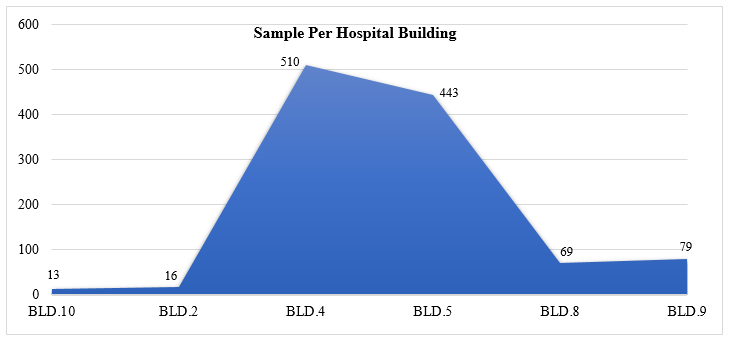
The table also details the patient distribution across various hospital buildings, shedding light on which areas have higher patient volumes. Building 4 and Building 5 have the highest patient counts, with 510 and 443 cases, respectively. In contrast, Buildings 2 and 10 have significantly fewer patients, with only 16 and 13 cases. This uneven distribution suggests that buildings with higher patient volumes may face more logistical challenges, potentially contributing to discharge delays. Focused interventions in these high-volume areas could help alleviate bottlenecks and enhance discharge efficiency.
Overall, the data highlights considerable discharge delays, long hospital stays, and high patient concentrations in certain buildings. By addressing these issues, the hospital could improve discharge efficiency, reduce patient wait times, and optimize bed availability for incoming patients.
Table 5. Patient Distribution Across Hospital Wards in a Tertiary Care Hospital in Riyadh
|
Patients Hospital Wards
|
Count
|
|
ISOLATION WARD
|
6
|
|
PSYCHIATRY WARD
|
13
|
|
SSSU
|
63
|
|
WARD 1-2
|
39
|
|
WARD 1-3
|
7
|
|
WARD 1-4
|
58
|
|
WARD 1-5
|
9
|
|
WARD 1-A
|
2
|
|
WARD 2-1
|
40
|
|
WARD 2-2
|
216
|
|
WARD 2-4
|
27
|
|
WARD 2-A
|
4
|
|
WARD 3-2
|
16
|
|
WARD 3-A
|
19
|
|
WARD 4-1
|
18
|
|
WARD 4-2
|
10
|
|
WARD 4-A
|
45
|
|
WARD 5-A
|
9
|
|
WARD 6-S
|
28
|
|
WARD 7-N
|
15
|
|
WARD 7-S-A
|
110
|
|
WARD 7-S-B
|
152
|
|
WARD 8-N
|
1
|
|
WARD 8-S-A
|
181
|
|
WARD 8-S-B
|
39
|
|
WARD1-5
|
3
|
|
Grand Total
|
1130
|
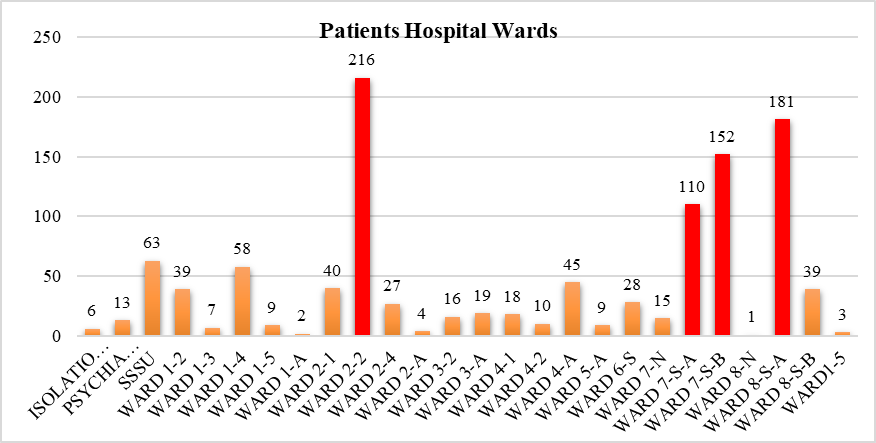
This table presents a breakdown of the patient distribution across various hospital wards in a tertiary care hospital in Riyadh, Saudi Arabia, with a total sample size of 1130 patients. Each row represents a specific ward, along with the number of patients in that ward. This distribution provides insight into patient allocation within the hospital, highlighting wards with higher patient counts, which may face greater pressure and potential challenges in managing discharge processes.
Among the wards, Ward 8-S-A and Ward 7-S-B have the highest patient counts, with 181 and 152 patients, respectively. These high patient numbers indicate that these wards handle a substantial portion of the hospital’s patient load, which could contribute to logistical challenges and delays in discharge, as these wards may face increased demand for resources and staff attention. Similarly, Ward 2-2 has a high patient count of 216, further emphasizing its role as a major hub within the hospital.
Other wards with notable patient numbers include Ward 7-S-A with 110 patients, SSSU (presumably a specialized surgical or short-stay unit) with 63 patients, and Ward 1-4 with 58 patients. These wards, though not as heavily populated as the largest wards, still have significant patient numbers and may contribute to discharge challenges due to their moderate to high occupancy.
In contrast, some wards have relatively low patient counts. For instance, the Isolation Ward has only 6 patients, which might reflect specific protocols limiting the number of occupants for infection control. Additionally, Ward 8-N and Ward 1-A have only 1 and 2 patients, respectively, possibly indicating these wards cater to highly specific or low-frequency cases.
Other specialized areas like the Psychiatry Ward (with 13 patients) and Ward 4-A (with 45 patients) show moderate patient counts, likely aligning with their specialized functions within the hospital.
Overall, this table highlights how certain wards handle significantly higher patient volumes, such as Ward 8-S-A, Ward 7-S-B, and Ward 2-2. These wards may be focal points for interventions aimed at reducing discharge delays, as their higher occupancy rates could contribute to bottlenecks. By addressing specific discharge needs in these high-density wards, the hospital could improve efficiency and patient flow across its facilities.
|
|
|
Figure 5. Patient Distribution Across Hospital Wards in a Tertiary Care Hospital in Riyadh
|
The present study on patient discharge delays at a tertiary care hospital in Riyadh, Saudi Arabia, highlights a predominant reliance on family members for transportation as a significant factor in delayed discharges, with 739 cases affected. This finding contrasts with prior research that identified different post-discharge support deficits as primary barriers. For example, Costa et al. (2012) emphasized the role of insufficient community services and social support, which left patients in acute care beds due to a lack of placement in rehabilitation or nursing facilities. Similarly, Worthington and Oldham (2006) highlighted the delay in discharges in rehabilitation settings due to inadequate support services for brain injury patients. These earlier studies demonstrate that while Riyadh’s hospital discharge delays hinge largely on family involvement in transportation, previous studies in other regions have emphasized community service inadequacies and the availability of post-discharge care.
The Riyadh study also underscores administrative and procedural issues as significant contributors to discharge delays, with 82 cases linked to the need for additional medical procedures or incomplete paperwork, and 67 cases delayed while awaiting medical results. Such administrative delays align with findings from Tipton et al. (2021), who noted the impact of insufficient administrative coordination on discharge efficiency. Åhlin et al. (2022) similarly identified structural inefficiencies and long lead times as barriers to patient flow, emphasizing the need for systematic operational reforms. These studies underscore a shared challenge in administrative delays across healthcare systems, suggesting that regardless of location, procedural and logistical complexities are common hindrances to timely patient discharge.
The Riyadh study’s observation of delays linked to patient and family preferences—specifically, cases where discharge was refused or delayed due to personal reasons—parallels findings by Landeiro et al. (2016), who noted that social isolation and the lack of family support led to delays, especially for older patients requiring additional care. While the Riyadh study shows instances where families extended discharge times due to personal circumstances, Landeiro et al.’s study emphasizes the opposite scenario: patients remaining in hospitals due to inadequate family or community support post-discharge. Both studies reveal the significant role family and personal circumstances play in discharge timings, albeit with contrasting impacts based on the healthcare setting and societal dynamics.
Regarding demographic disparities, the Riyadh study found that the majority of delayed discharges affected female patients, potentially due to cultural factors influencing family involvement in care decisions. In contrast, past studies reveal mixed findings on gender-related discharge delays. For instance, Little et al. (2015) observed that in Ontario’s mental health settings, male patients were more likely to experience delays due to specific institutional factors, while studies in the UK reported no significant gender association with discharge delays (Haw et al., 2017; Tucker et al., 2017). These differences underscore that gender's impact on discharge timings may be context-specific, influenced by local cultural and healthcare dynamics.
The Riyadh study’s age distribution analysis found that adults (14-65 years) accounted for the majority of delayed discharges, followed by elderly patients over 65, who often require additional support services. This trend aligns with findings from Gonçalves-Bradley et al. (2016), who pointed out that the need for specialized post-discharge care for elderly patients significantly contributes to extended hospital stays, especially when social or family support is limited. The present study’s observation that elderly patients face unique discharge challenges reinforces the global recognition of this issue, as evidenced in multiple studies advocating for age-specific interventions to facilitate timely discharges.
The Riyadh study also provides a unique insight into the distribution of discharge delays across various hospital wards, with high patient volumes in specific wards like Ward 8-S-A and Ward 7-S-B contributing to bottlenecks. This finding is consistent with Berg and Restan’s (2005) study of acute psychiatric units in Norway, which showed that high patient occupancy in certain units could exacerbate discharge delays due to limited bed availability and increased demand for resources. Both studies underscore the importance of addressing discharge bottlenecks in high-density wards to optimize patient flow and alleviate systemic strain on hospital resources.
In terms of proposed interventions, the present study aligns with suggestions from past studies advocating for enhanced discharge planning and the implementation of standardized protocols. Gonçalves-Bradley et al. (2022) emphasized the effectiveness of structured discharge planning and post-discharge services, a strategy also recommended in the Riyadh study to mitigate discharge delays. Furthermore, Micallef et al. (2022) identified discharge facilitation tools, such as “discharge before noon” policies, as effective measures to streamline discharge processes, similar to the Riyadh study’s recommendation for using standardized discharge protocols to improve efficiency. These interventions reflect a shared approach across studies, recognizing the need for strategic planning and interdepartmental coordination to address discharge challenges.
Conclusion
In conclusion, the Riyadh study identifies transportation-related delays, administrative inefficiencies, and cultural factors as primary causes of delayed discharges, adding a unique regional perspective to the existing literature on discharge delays. While past studies have emphasized community service inadequacies, social support deficits, and organizational inefficiencies, the present study underscores the critical role of family-based transportation and cultural dynamics in discharge timelines within Saudi Arabia. These findings highlight the importance of tailoring discharge interventions to the specific needs and societal contexts of each healthcare setting to enhance discharge efficiency and patient flow.